
Success stories
Since 2008, a small group of Lake County residents has kept an incinerator out, held a landfill to its permits, pushed recycling forward and stopped a tollway. Every one of these started with neighbors who decided to show up.
Advocacy 101
Want to win one in your own community? We teach what we learned along the way: who decides, when, and how residents change the outcome. See the steps and workshops →
2008
No incinerators in Lake County
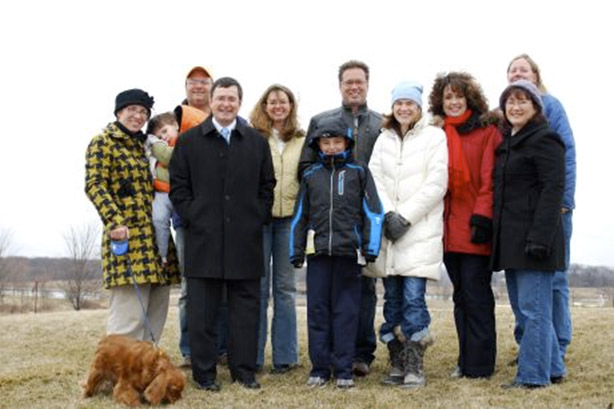
In our first campaign, under the name Incinerator-Free Lake County, we led the effort to keep incinerators out of the county’s five-year solid waste plan. We were inexperienced, but we worked hard and had support from our friends in the Sierra Club and from many elected officials. The County Board gave us a fair, open-minded hearing and agreed.
Since then, “Incinerator-Free” groups have formed around the country, and we have advised many of them as they fought to keep their own communities clean.
2008 onward
Holding Countryside Landfill to its permits
Our members first came together as neighbors of Countryside Landfill in Grayslake, where unusual emissions were making life miserable for people nearby. Starting in 2008 the landfill accepted construction debris containing gypsum drywall, and complaints about hydrogen sulfide grew. We organized residents and pressed regulators until the U.S. Environmental Protection Agency stepped in. Its notice of violation led to an agreement that put restrictions on the landfill, including an end to loads of ground gypsum.
When problems came back a few years later, we asked our local governments for help. The Village of Grayslake, Lake County and the Solid Waste Agency of Lake County joined forces to reopen the landfill’s host agreement and added new requirements, including hydrogen sulfide monitoring. We still watch the landfill’s permits and self-reported data for anything out of the ordinary.
Air monitoring
Have air monitors, will travel
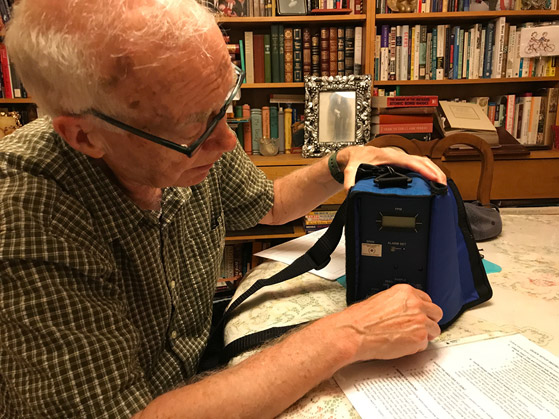
Thanks to the hard work and fundraising of two students from Prairie Crossing Charter School, we own two handheld air monitors, one for sulfur dioxide and one for hydrogen sulfide. We can take them to neighborhoods near polluting facilities such as landfills and collect data that alerts oversight officials to problems.
2010
A 60 percent recycling goal
Saying no to incineration came with a yes: we asked the county to redouble its waste-diversion efforts. The Solid Waste Agency of Lake County formed a Recycling Task Force, which first met in June 2010, to raise the county’s recycling rate from about 38 percent to 60 percent by 2020. We served on that effort and kept pushing for the goal. More on our zero waste work.
2014
A sustainability coordinator for Lake County
We joined then-County Board member Pat Carey in advocating for a Sustainability Coordinator on the county’s staff, and the position was created. The County Board had made sustainability a priority. We believed it needed an environmental expert on staff to turn that vision into results.
2018
Honoring the people who protect the region
Our first Environmental Awards gave George Ranney a Lifetime Achievement Award and recognized Illinois legislators who championed the environment. Read the presentation.
2017 to today
From a tollway to a greenway
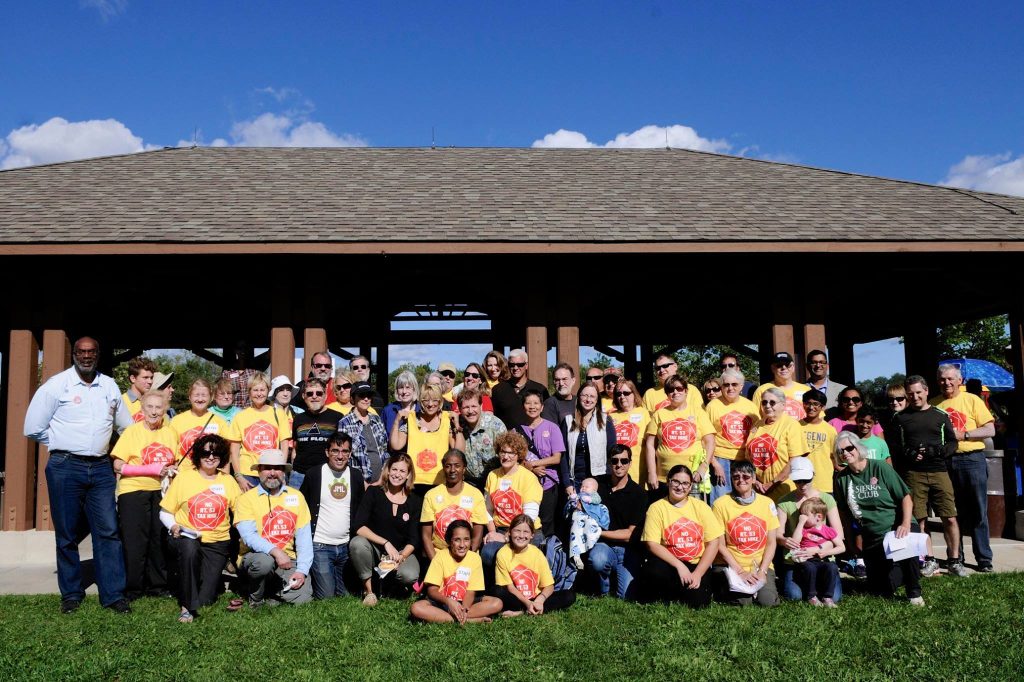
For more than 60 years, a Route 53/120 tollway through the middle of Lake County looked inevitable. The state spent decades and tens of millions of dollars buying about 1,100 acres for it. We were founding members of the Green Corridor Coalition, which showed the extension was unaffordable, unneeded and unfair, and offered a better transportation plan in its place.
We read the fine print, too. In 2018 we discovered that a formal federal comment period on the tollway study had opened without public notice. We alerted our coalition, a group of environmental and civic organizations signed a letter, and the comment period was extended. The story is in our archive.
In July 2019 the Illinois Tollway ended its study. The work since then has been about the land: MSG helped build the Green Corridor Coalition to keep the corridor whole and turn it into a 12-mile public greenway from Long Grove to Grayslake. When pieces of it were proposed for other uses in 2024, we argued that every decision belongs in the greenway plan, not ahead of it.
Route 53, step by step
- August 2018We uncover an unannounced federal comment period on the tollway study. After a coalition letter, it is extended. Read it.
- July 2019The Illinois Tollway ends its study of the Route 53/120 extension, stopping the project for the fourth time. We were founding members of the Green Corridor Coalition that fought it and won. Our statement that day.
- December 2022A state task force recommends turning the roughly 1,100 acres bought for the tollway into a greenway.
- March 2023The Lake County Board endorses the greenway, with Barbara Klipp speaking for the Green Corridor Coalition.
- March 2024When a training facility is proposed on 34 acres of the corridor, we and the Village of Hawthorn Woods argue against carving up the greenway before it is planned. Daily Herald coverage.
- June 2024The General Assembly approves $1 million for the Illinois DNR to plan the greenway.
- April 2025The Lake County Forest Preserves opens talks to take over about 1,000 acres of the corridor. The full greenway story.
- NowGetting Route 120 fixed without a bypass through the wetlands. Help us win this one.
Help write the next one
Each of these took years of persistence and a little money at the right time. Your gift keeps us in the room on Route 120.
Sources
- Daily Herald, Countryside Landfill emissions hearing, March 23, 2011 (gypsum drywall, hydrogen sulfide, Illinois EPA hearing)
- Daily Herald, Lake County recycling task force has lofty goal, June 25, 2010
- Greenway milestones: see the sources on our Greenway page