
IDOT Route 120 Public Meeting #2: Tuesday, November 10, 3–6 p.m.
Fix Route 120.
From Volo to Grayslake, without a bypass.
Stop studying a $2 billion bypass. Start fixing the road we already have.
Route 120 needs work. The question IDOT is answering now is whether to fix the road we have, or build a second highway through the wetlands south of it. We are asking for the fix.
On this page The study Why not a bypass What fixing it looks like Comment to IDOT
The study
What IDOT is studying
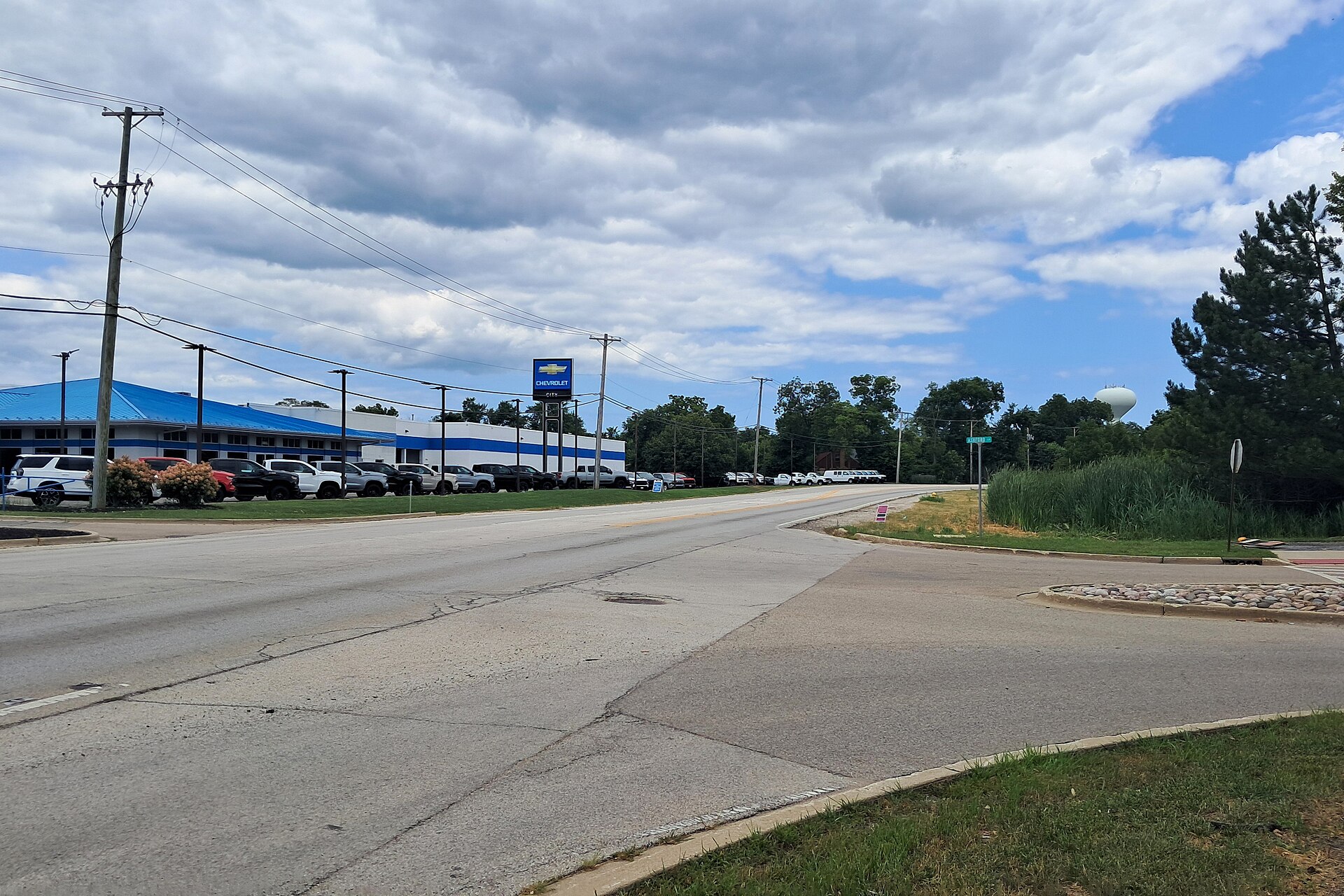
Route 120 is a strategic regional arterial road connecting Woodstock to Waukegan. Its tortured past explains its tortured path: lane restrictions, rail crossings, sharp curves and curb cuts that impede smooth traffic flow, and connections with many neighborhood businesses and streets that make it dangerous for children, shoppers, residents, pedestrians and cyclists, as well as drivers.
The Illinois Department of Transportation, working with the Federal Highway Administration, is conducting a Planning and Environmental Linkages (PEL) study of Route 120 from Route 60 in Volo to Almond Road in Grayslake, about 9.3 miles, to improve traffic flow and safety through the corridor. A PEL study is the stage where the range of options gets set. Whatever comes out of it moves on to engineering and environmental review.
There are ways to make traffic on existing Route 120 flow better, and ways to make it safer for people, but IDOT is unlikely to achieve both. Fixing existing Route 120 could include separating the road over or under the rail lines (grade separations), adding roundabouts and improved intersections, adding lanes where possible, and using proven traffic-calming features to make crossings and nearby trails less dangerous.
The alternative is a new bypass south of today’s Route 120 that ignores the existing road and tries to avoid repeating its problems. IDOT engineers have proposed several bypass configurations: three or five lanes, two to nine miles long, designed either as an urban street with curbs or as a rural highway with shoulders. The longest would run from Almond Road to west of Wilson Road. In September 2025, IDOT said no preferred solution had been chosen and cost estimates were still being developed. However, when the Tollway studied that same route in 2018, its cost estimate was $1.88 billion, and that was in 2018 dollars. Increases in the cost of energy, steel and labor would put it well over $2 billion now, and the project is unlikely to break ground anytime soon.
9.3 miles, two rail crossings at grade, 1,263 crashes from 2017 to 2021 by IDOT’s count. Tap a road, a rail crossing or the bypass line to see what is there.
IL 60, Volo, mile 0. IDOT’s IL 120 study starts here and runs 9.3 miles east to Almond Road in Grayslake.
Rail crossing near IL 134. Trains cross Route 120 at grade here. We are asking for a fix at this crossing as part of improving the road we have.
IL 134, Hainesville, mile 4.5. The Route 120/134/Hainesville Road junction is a bottleneck. We are asking IDOT to rework it, with roundabouts where they fit.
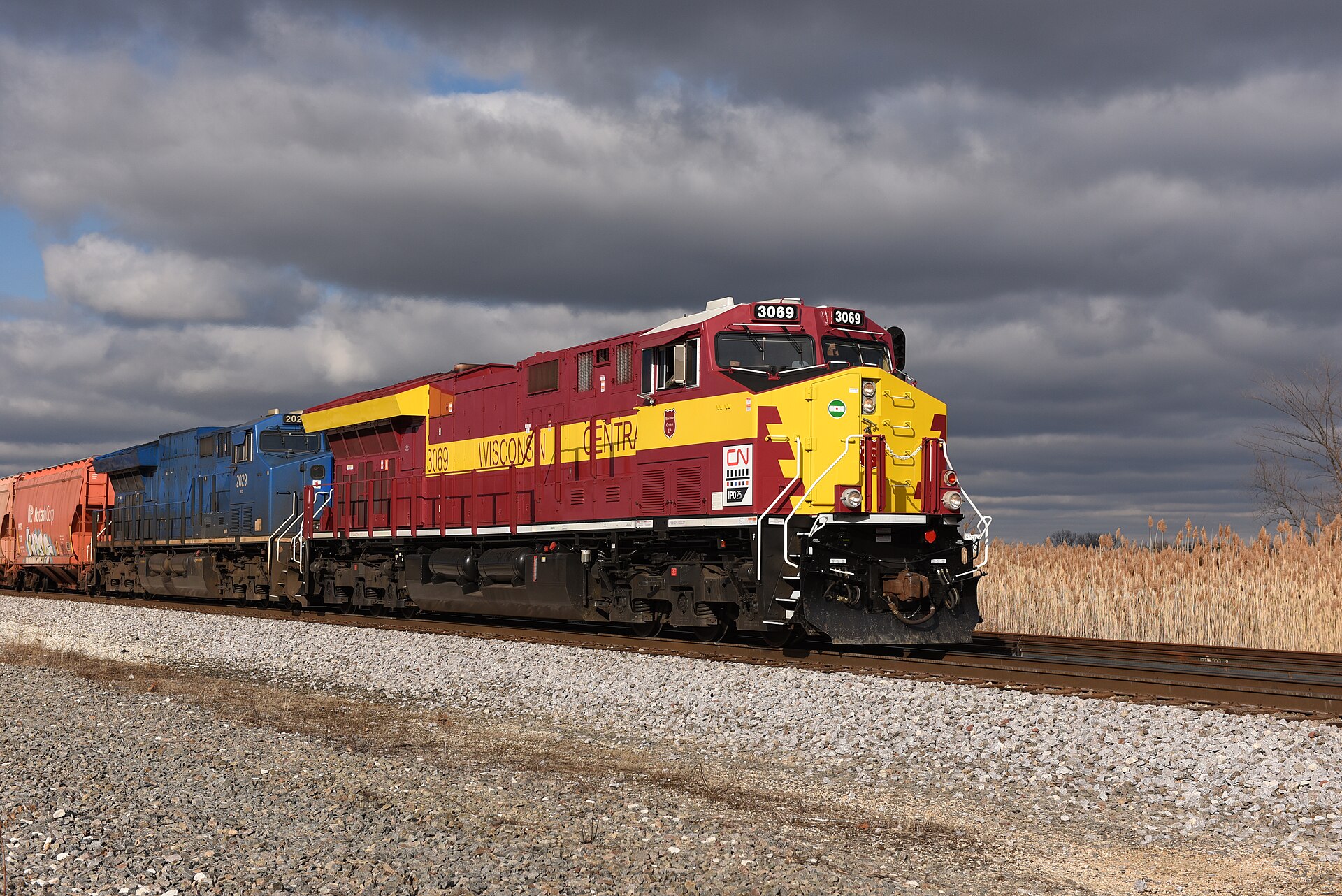
CN crossing, just west of IL 83. Canadian National freight trains cross Route 120 at grade, and a stopped train can block several Grayslake crossings at once. In August 2026 one held up paramedics on their way to a woman in labor. An underpass or overpass would fix it.
IL 83, Grayslake, mile 6.5. One of the corridor’s busiest intersections. Our 2019 transportation vision for Lake County called for a rail grade separation at Routes 120 and 83.
US 45, Grayslake, mile 7.9. IDOT’s current highway program includes added lanes and reconstruction of Route 120 from Ashford Lane to US 45.
Almond Road, Grayslake, mile 9.3. The study ends here. Work to add lanes between Almond and Atkinson roads was already beginning when IDOT stopped it to start the federal study.
Bypass options. The bypasses IDOT is studying would run south of today’s road, through land its own study lists as sensitive, including the Liberty Prairie Reserve, Almond Marsh and the Big Sag Wetlands. The line on this map is schematic, not IDOT’s alignment.
Why not a bypass
Why a bypass is the wrong fix
The bypass is dangerous, functionally unnecessary, financially unaffordable, environmentally unpalatable and politically unacceptable.
It repeats the dangers of existing Route 120 instead of fixing them
The tortured path and lane restrictions of today’s Route 120 would remain, and a high-speed bypass close to neighborhoods would bring new hazards for the people who live there. The bypass is proposed for 40 mph, and speed decides who survives a crash: a person on foot struck at 23 mph has about a 1-in-10 risk of dying, and at 42 mph the risk is about 1 in 2.
It cuts through environmentally sensitive open space we cannot replace
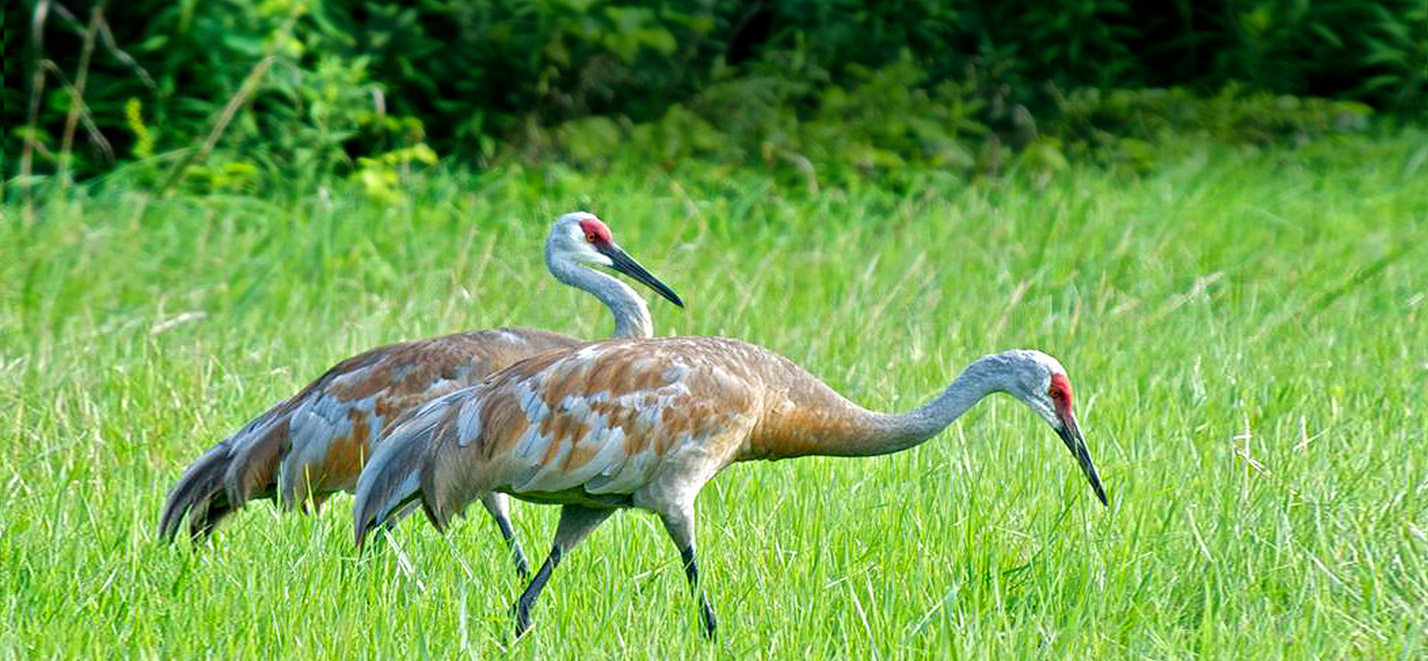
The bypass would destroy or threaten some of the region’s most significant natural areas, including two Illinois Nature Preserves, two areas listed on the Illinois Natural Areas Inventory (INAI) for their statewide conservation significance, Almond Marsh and Kettle Grove forest preserves, the Big Sag Wetlands, the Liberty Prairie Reserve, Mill and Manitou Creeks, habitat for 43 federal- and state-protected threatened and endangered species, and 325 acres of wetlands, most of them very high quality. Most of the bypass would also pave through flood hazard areas, which, combined with destroying nearby wetlands, would likely lead to more flooding in the area. Destroying these undisturbed lands and waters is worse than adding to the impacts on lands and waters Route 120 already affects, yet IDOT’s simplistic comparison scores them equally.
It is unaffordable
The bypass is a financial and political dead end. It can be expected to cost close to a colossal $2 billion, based on the estimates the Illinois Tollway produced when it considered the project as part of the now-defunct Route 53 extension. In fact, that projection may be an understatement: it was made at least seven years ago, and costs rise with inflation. No funding source for this kind of cost has been identified, and a multitude of previously authorized transportation projects across the state are already competing for limited taxpayer dollars.
A bypass would not just cost billions to build. It would add miles of new highway that taxpayers must maintain forever. As the nonprofit Strong Towns puts it, “Every new lane mile we build adds to our backlog of future transportation costs.”
It leaves the real problems in place
IDOT counted 1,263 crashes on Route 120 from 2017 to 2021, and more than half were rear-end crashes, the kind that stop-and-go traffic produces at signals, rail crossings and lane merges. Even the 2009 plan that first drew the bypass expected the existing road to keep carrying heavy local traffic. A bypass would mean years of construction and a second road to maintain, without solving the problems on existing Route 120.
When trains block Route 120, they block ambulances too
Canadian National freight trains cross Route 120 at grade just west of Route 83, and a stopped train can block several Grayslake crossings at once. Grayslake’s police and fire chiefs have warned for years that blocked crossings delay emergency response.
In August 2026, paramedics on their way to a Grayslake woman in labor were stuck behind a train that cut off the east side of town at both Route 120 (Belvidere Road) and Center Street. A rookie police officer, six hours into her first shift, delivered the baby before the ambulance could get there. Mother and baby are fine. The next emergency may not end so well.
It keeps happening. On July 30, 2026, a stalled CN freight blocked the Center Street, Route 120 and Route 83 crossings for about four hours. When a crash came in at Route 120 and Atkinson Road, an ambulance had to come from the fire district’s second station because the train held up crews at the first. On October 19, after a pedestrian incident on the same line, those three crossings were closed for hours during the evening rush, with drivers sent to the Lake Street crossing and Metra service halted through Grayslake.
A bypass to the south would leave the Route 120 crossing exactly as it is. A grade separation would fix it.
It is unnecessary, and the population projections are ridiculously high
Adding a bypass would create what traffic planners call “induced demand,” or what we like to call “if you build it, they will come.” IDOT’s own traffic modeling shows that this $2 billion project would increase the number of cars per day, not decrease it. Instead, fixing existing Route 120 with a grade separation at Route 83 (an overpass or underpass at the train tracks), some additional lanes, improved intersections including roundabouts, safety improvements, traffic demand management and technology can relieve congestion significantly, at a fraction of the cost and without destroying our communities or environment.
How the growth estimates got inflated
The case for studying a bypass rests on faulty population estimates. The traffic volumes IDOT projects for the study area were drawn from a CMAP estimate of future population growth that appears implausible: 16 times greater than the growth we have seen over the past several decades. Some population growth can be expected, but the estimates in this study seem overstated by a hefty margin. As one measure of how exaggerated they are, the Village of Grayslake has cautioned IDOT that its own municipal plans anticipate a much more modest level of growth.
Those inflated estimates set off a chain reaction of flawed logic: exaggerated expectations of population growth lead to excessive projections of future traffic, which culminate in IDOT’s prescription of up to five lanes of new road capacity in the form of a bypass. That chain of miscalculations is what keeps pointing IDOT toward a bypass.
Opportunity cost
There is an opportunity cost to even leaving the bypass in the plan. IDOT’s own internal documents, which we received through our Freedom of Information Act work, show that IDOT does not plan to invest in improving existing Route 120 while its pie-in-the-sky bypass remains a possibility, however remote. This is what has happened for decades: IDOT refuses to fix existing Route 120, to try to make traffic so unbearable that people will clamor for the bypass. It hasn’t worked. It just blocks investment that would ease our ongoing congestion.
When the Illinois Department of Transportation did not fulfill its obligation to provide us with public information when board member Evan Craig submitted a Freedom of Information Act (FOIA) request in the spring of 2024, he filed a lawsuit with our support and assistance and in consultation with us. His suit won summary judgment, and we are awaiting final settlement. To date, we have received and studied over 40,000 documents in total in our Freedom of Information Act work on the 120 project.
What IDOT’s own documents show
The more IDOT lets its preference for a bypass divert resources from practical, less costly and more timely fixes, the greater the chance that a study meant to relieve Route 120 drivers will only make things worse for them. For residents stuck in Route 120 congestion, the result is more frustrating stalemate. The bypass also causes widespread discord in the community, while feedback from Community Advisory Group members so far shows broad agreement on a range of other improvements to ease congestion on Route 120. Pursuing a bypass needlessly passes up that chance for consensus.
It is the last piece of an old tollway plan
The Route 120 bypass has long been tied to the Route 53/120 tollway that the Illinois Tollway shelved in 2019, and was at times planned as its east–west arm. Planners at the time noted that if Route 53 became an expressway, Route 120 would need to be one too. The tollway is gone, and the land bought for it is becoming a greenway. Its leftover highway arm does not need to survive it.
The fix
What fixing it in place looks like
Big projects take decades and may never come. The better approach is to look at where drivers actually struggle on Route 120 and do the next smallest thing that helps, right away: a grade separation at the CN tracks, a roundabout at the worst intersection, a turn lane where traffic backs up. Each fix pays off on its own, and none of them has to wait for a $2 billion road to be funded first.
We have been asking for these fixes since 2019, when our transportation vision for Lake County called for a rail grade separation at Routes 120 and 83. Grayslake and its neighbors have since put together the Belvidere Corridor Road Capacity Plan for the existing road. We support funding the improvements it is built around:
- Rail grade separations. An underpass or overpass (grade separation) at the CN tracks west of Route 83, and a fix for the crossing near Route 134, so freight trains do not bring things to a halt.
- Add lanes where possible. Work to add lanes between Almond and Atkinson roads was already beginning when IDOT stopped it to begin the federal study.
- Safer and more efficient intersections. Rework the busiest intersections, such as Route 83 in Grayslake and the Route 120/134/Hainesville Road bottleneck, and add roundabouts, which are safer and more efficient.
- Room for people, not just cars. Traffic calming for safer crossings, trail connections and better access to public transit, which IDOT lists as part of the study’s purpose, can be inexpensive and should be a priority.
Some of this is already moving. IDOT’s current highway program includes added lanes and reconstruction of Route 120 from Ashford Lane to US 45 in Grayslake. As Grayslake Mayor Elizabeth Davies put it, the state should fund the improvements that are ready now rather than wait on a bypass that may never come.
Your turn
Tell IDOT what you think
IDOT accepts comments on the study at any time, not only at public meetings. Public Meeting #2 is Tuesday, November 10, 3–6 p.m., at the University Center of Lake County in Grayslake. A short note in your own words is worth more than a form letter. Say where you live, how you use Route 120, and what you want fixed.
Where to send it
Email [email protected], or contact Corey Smith, IDOT District 1, at (847) 705-4103. The study’s documents are posted at il120study.com.
Points you might make:
- Please carry forward alternatives that improve Route 120 on its existing alignment.
- Please drop the bypass alternatives because of their impact on wetlands, forest preserves and habitat for threatened and endangered species.
- Please prioritize rail grade separations and the intersections with the most crashes.
Help fund the Fix 120 campaign
We read every IDOT document, show up at every meeting and make sure residents know when to speak. Your gift pays for that work, and volunteers help us bring neighbors to the meetings.
Questions we hear
Is this the same fight as the Route 53/120 tollway?
Related, but not the same. The tollway extension was a new road the Illinois Tollway studied and then shelved in 2019. This is IDOT’s study of Route 120, an existing state highway. The bypass idea is connected to the old tollway plan, which is why we are watching it closely.
Are you against improving Route 120?
No. We want it fixed, and soon. We are against spending billions on a new road through wetlands when targeted work on the existing road would help sooner and for far less.
When is the next public meeting?
Public Meeting #2 is Tuesday, November 10, 2026, from 3 to 6 p.m. at the University Center of Lake County, 1200 University Center Drive, Grayslake. That is IDOT’s current schedule; if it changes, we will post it here and send an alert. IDOT’s schedule calls for Public Meeting #3 in winter 2026–27, with the study finishing in spring 2027. Sign up and we will tell you if anything changes.
Sources
- IDOT, About the IL 120 PEL Study (study limits and schedule)
- IDOT, Draft Purpose and Need, September 2024 (natural resources, state-listed species)
- IDOT, Responses to Public Meeting #1 comments
- Daily Herald, Billions for a Route 120 bypass in Lake County?, September 7, 2025 (bypass options, crash data, cost estimate, Belvidere Corridor plan)
- Daily Herald, What do you foresee for Route 120?, April 22, 2024 ($56.8 million in corridor projects, CN underpass)
- Daily Herald, Grayslake concerned about stopped freight trains blocking roads, November 13, 2013
- Daily Herald, Rookie cop began her first shift at 6 p.m. Six hours later, she delivered a baby, September 17, 2026
- Lake & McHenry County Scanner, Stalled freight train blocks numerous crossings for several hours, affects emergency response in Grayslake, July 31, 2026
- ABC7 Chicago, Grayslake freight train incident halts Metra service; Center Street, Route 120 and Route 83 crossings closed, October 19, 2026
- Strong Towns, America must end highway expansions before it’s too late, February 15, 2024
- AAA Foundation for Traffic Safety, Impact speed and a pedestrian’s risk of severe injury or death, September 2011
- IDOT, FY 2025–2030 Highway Improvement Program, Lake County (Route 120, Ashford Ln to US 45)
- CMAP, Summary of the Route 120 Unified Vision process, 2011